
East Bay Jazz Hero
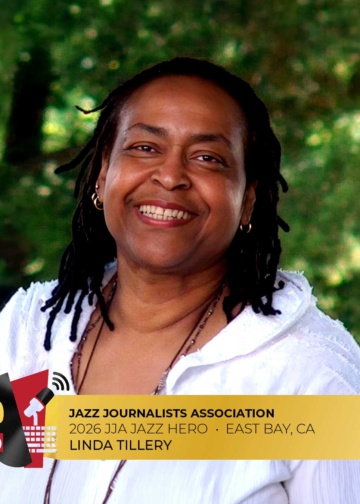
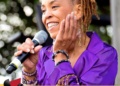
Over the past four decades no one in the San Francisco Bay Area has done more to breathe life into freedom songs than Linda Tillery, the powerhouse Oakland singer, activist, educator, and leader of the Cultural Heritage Choir, a vocal and percussion ensemble that encompasses the entire history of African-American music. She has earned the title of Jazz Hero through her work on and off the bandstand mentoring many of the region’s most interesting jazz and jazz-adjacent vocalists.
A San Francisco native, Tillery first gained notice on the East Bay music scene in 1968 as the six-foot-tall 19-year-old frontwoman for the Berkeley psychedelic rock band The Loading Zone. With the rise of the women’s movement in the 1970s she was a creative force at Olivia Records, the pioneering label run by a lesbian-feminist collective. At the same time, she contributed to dozens of albums by the likes of Santana, Boz Scaggs, Sheila E, John Santos, and Turtle Island String Quartet as a studio musician.
Tillery honed her skills as an improviser in the early 1990s with Bobby McFerrin’s talent-laden a cappella ensemble Voicestra. “Working with Mr. McFerrin opened up my ears and my mind to going back to find out how people made music before all the electronics,” Tillery says. “I remember the first time I heard a Gullah spiritual I almost jumped out of my skin. I’d never heard anything like that. It sparked a feeling of jubilation and admiration.”
Watching a PBS broadcast of Kathleen Battle and Jessye Norman singing Negro spirituals, Tillery was so struck by the music’s power and the memories summoned by the songs that she decided to start an annual spirituals concert in Oakland, an event that evolved into the Cultural Heritage Choir. A self-taught musicologist, she’d been researching African-American music for years. The repertoire she developed for the CHC encompassed just about every idiom, from field shouts, work songs, and spirituals to R&B, soul, and jazz.
Jazz vocalist Zoe Ellis, who’s performing in a revived version of the CHC, describes Tillery as “a keeper of some of the most valuable information. She’s got this depth of understanding where in a two-hour show she can explain how the music traveled from Africa through the trans-Atlantic slave trade, across the Americas, and into American popular music.” It’s knowledge that has nourished the Bay Area jazz scene with a deep reservoir of soul.
—Andrew Gilbert, JJA Secretary, Board Member